

When you are dealing with load-bearing walls, it’s not as simple as just cutting a hole. The balance of your home is at stake. Without a plan, it’s like a game of Jenga, and you don’t want a window to compromise the structural integrity of your house!
That would be an expensive mistake. Here’s how to cut a window in a load-bearing wall.
Key takeaways:
- Cutting a window into a load-bearing wall is not a simple DIY project. These walls carry structural weight, and improper changes can cause sagging, deflection, and long-term damage.
- A structural engineer is required to calculate loads, specify materials, and provide stamped drawings for permits.
- The process includes four key steps: evaluation, temporary shoring, structural framing, and inspection.
- Corner windows are more complex because the corner post must be fully replaced with a structural solution.
- Engineered systems like TonyView™ can handle corner loads directly and simplify installation while meeting ICC-ES structural standards.
Disclaimer: This article is for informational purposes only and is not intended to serve as engineering, construction, or legal advice. Modifying a load-bearing wall involves structural risks and should only be performed by qualified professionals. Always consult a licensed structural engineer and obtain the necessary permits before beginning any work. Requirements may vary based on location, building codes, and site conditions. The authors and publishers assume no liability for any damages or outcomes resulting from the use of this information.
What is a Load-Bearing Wall?

A load-bearing wall is an important structural element of your home. The load-bearing structure of your home includes exterior walls and some interior walls, and these transfer the weight of the roof, additional stories, and environmental factors like wind, seismic activity, and snow loads down to the foundation.
The walls themselves are made of vertical columns called studs, each of which carries a portion of the weight. When you alter those vertical columns, you create a structural gap. The International Code Council has standards for wood-frame wall construction and bearing requirements that dictate how windows and doors must be installed.
Is Adding a Window to a Load-Bearing Wall a Simple DIY?

Removing studs to add a window seems like it could work — after all, wouldn’t the window replace the gap? Framing a large opening for a window often seems like a project a homeowner could take on themselves.
Unfortunately, it’s not that easy. Cutting a new window in a load-bearing wall is almost never an easy DIY, unless you happen to be an experienced engineer or homebuilder!
Why You Need a Structural Engineer
When you remove studs, the weight doesn’t disappear. It must be rerouted around the opening. When installed correctly, a traditional window uses a header beam. A corner window uses a cantilevered beam, which is a structural element that’s anchored only at one end, transferring the load to a single point.

Adding these types of beams requires careful assessment and calculations. Structural engineers will determine the exact weight carried by the specific spot. This is called the tributary load. This will also include a margin for safety, which ensures stability, even in cases of extreme weather or after years of wear and tear. An engineer will also specify materials to ensure the window will be able to withstand the forces it’s subjected to.
Finally, an engineer is usually required to submit plans for permitting. Without an engineer, your windows won’t be possible!
What Happens When It’s Done Wrong
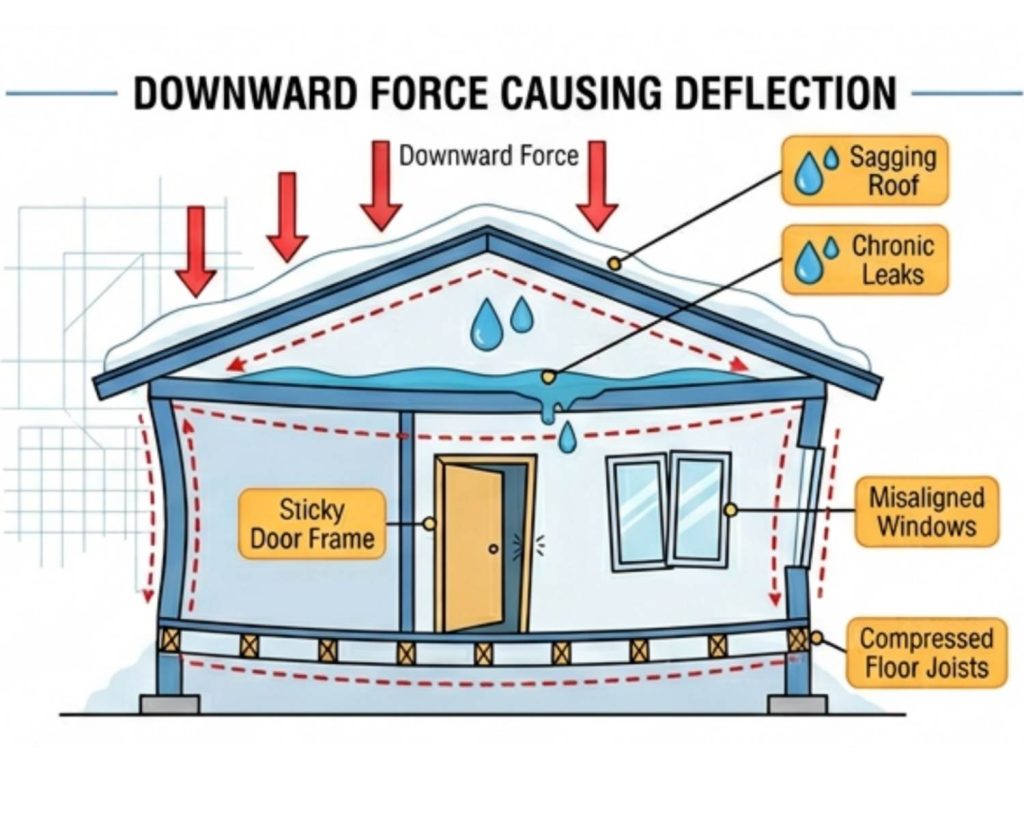
When you don’t properly calculate the loads and a window is installed incorrectly in a corner or load-bearing wall, the longevity of your home and its structural integrity will be compromised. Cutting a window into a load-bearing wall can be risky without the proper support and professional guidance.
However, it’s a misconception that your home will immediately crack and crumble. Over time, an improperly installed window will lead to cracks in drywall, shifting rafters, and structural creep. Because wood is a flexible material, an undersized header or unstable cantilever beam will slowly sag under constant pressure from the weight above.
The downward force will compromise every part of your home — leading to a sagging roof that pools water, chronic leaks, sticky doors and windows, and compressed floor joists. The technical term for this is “deflection” and it’s how engineers and architects calculate failure in beams. Even if a beam doesn’t break, if it bends more than 1/360th of its span, it’s considered a failure.
How It Works: Cutting a Window into a Load-Bearing Wall

Adding a window to a load-bearing wall or corner required precision and attention to detail. Here’s how a professional would install one:
Step 1: Evaluation
A structural engineer begins by reviewing architectural drawings and performing an on-site assessment to confirm the wall’s role in the load path. They calculate the tributary load, or the specific weight that portion of the wall is carrying from the roof, floors, and framing above, and factor in a safety margin for extreme weather and long-term wear. They also identify everything inside the wall: plumbing, electrical, and HVAC that will need to be rerouted. This step typically concludes with stamped engineering drawings, which are required to pull a permit in most jurisdictions.
Step 2: Add Temporary Support
Before a single stud is cut, a temporary shoring wall is built to take over the load while the structural wall is open. This isn’t optional:without it, removing studs transfers unplanned stress directly to the ceiling and framing above, which can cause immediate cracking, rafter movement, or drywall damage even before the permanent work is done. The shoring wall stays in place until the new structural elements are fully installed and verified.
Step 3: Structural Replacement
With the wall safely shored, the existing studs are removed to create the rough opening. For a standard mid-wall window, a header beam is installed across the top of the opening, supported on each side by jack studs, which carry the header’s load, and king studs, which run full height and anchor the assembly. Cripple studs fill the space above the header up to the top plate.
For a corner window, a cantilevered beam system replaces the corner post entirely. This is a more complex installation that requires careful engineering to transfer the load to a single anchor point. In either case, the framing must match the engineer’s specifications exactly, including lumber species, dimensions, and connection hardware.
Step 4: Inspection
Once the structural framing is complete, a building inspector reviews the work against the engineer’s stamped drawings before anything is closed up. They verify beam sizing, connection hardware, nail patterns, and overall compliance with the approved plans. If the work doesn’t pass, the wall must be reopened and corrected, which is why getting the engineering right from the start is essential. Only after the inspection is signed off does drywall, siding, or finish work begin.
How to Add Structurally-Sound Corner Windows
A corner window has typically meant either a bulky post blocking your view, or an incredibly expensive cantilevered system that requires a crane and a team of specialists. However, new systems like TonyView™ are changing what’s possible for homeowners.
The TonyView™ system uses a patented, reinforced structural frame designed to do the job of the corner post you’re removing. While most windows require the house to be built around them, this system is engineered to be part of the house’s load-bearing system.

It replaces the need for massive, complex cantilevered beams by using a frame that has been rigorously tested to meet ICC-ES (International Code Council) structural standards.
For homeowners looking to add a view to an existing room, this system simplifies the retrofit process. Because our units are load-bearing, they minimize the amount of invasive overhead structural work typically required to keep a second story or roof from sagging.
How to Install TonyView Windows

TonyView is designed to be fully code-compliant and easy for professional to install without complicated engineering. Here’s the process:
Structural Installation
The corner framing must be prepared, leveled, and solid-blocked, with headers meeting at the corner at a proper alignment, typically a 45° miter. A stainless steel sill shoe is set over sealant, then the TonyView™ unit is placed, shimmed, and secured to the structural brackets and sill. The load is then gradually transferred from the temporary shoring to the TonyView unit while keeping the assembly plumb and level. All fasteners are fully tightened only after final alignment is confirmed.
Waterproofing
Waterproofing is flagged as critical for warranty compliance. It starts with sill pan flashing and works upward, using a self-adhered membrane to fully integrate the unit with the building’s weather barrier. Vertical posts and the head are flashed per standard high-performance window practices, and counterflashing and top flashing are added to direct water away from the system.
Final Steps
The unit should be protected during construction, and all fasteners and seals must be verified before bracing is removed. Approved sealants, flashing methods, and detailing must be followed exactly as shown in the full installation guide.
Explore TonyView Corner Windows

TonyView is an advanced system that makes the process of installing a load-bearing corner window much simpler. Our engineered system makes it easier, less expensive, and more efficient to complete this high-stakes structural window replacement.
TonyView™ offers units with different load-bearing capacities: standard & heavy, to suit projects that need support for up to three stories. In addition, we offer windows suite to both cold and hot environmental conditions, ensuring your home’s energy performance meets the same standards as its aesthetics.
