
When building or renovating a home, windows are carefully planned. The frame of a house must support the entire load of walls, stories, roofs, furniture, and occupants. That means where there are windows, the frame of the house must be engineered such that the load bridges over the window.
“Retrofitting” a window refers to installing a new window into an existing frame. Retrofit window projects involve replacing a window that fits into the same space, without altering your home’s framing. But what if you want to change up the look of your home?
Keep reading to learn more about retrofit window replacement, including:
- How retrofitting a window works
- Retrofitting vs replacing a window
- Retrofitting corner windows
- Adding corner windows without complex engineering
How Retrofitting a Window Works
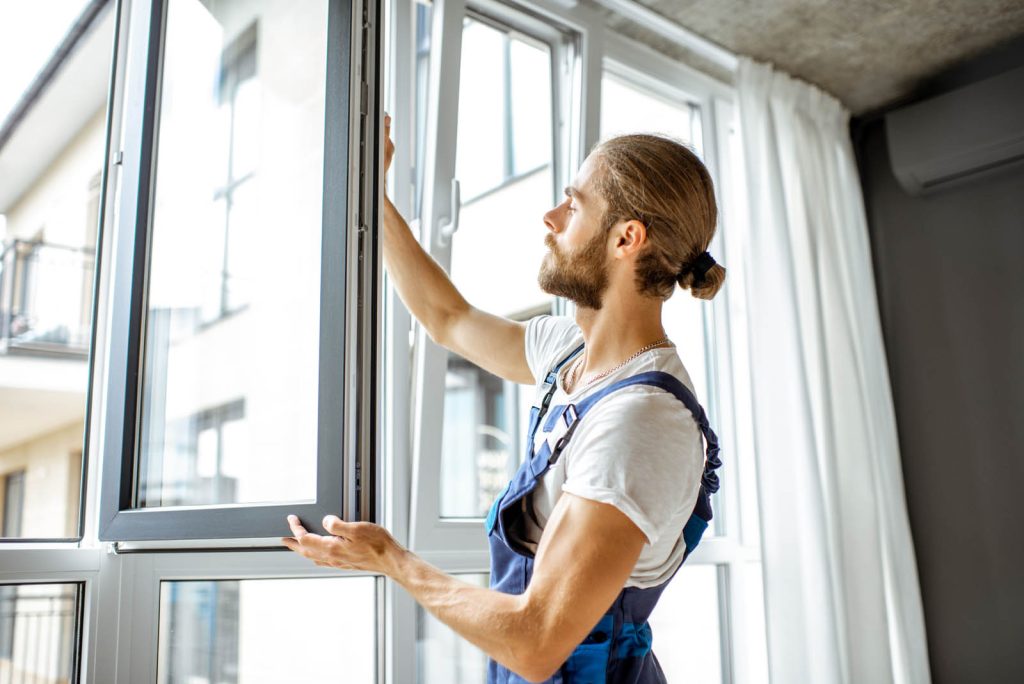
A retrofit window is designed to slot into the existing dimensions. The process involves measuring, removing everything inside the original frame, and then sliding in a new window that fits within the dimensions.
However, this results in losing a few inches of visible glass. Because a retrofit window has its own frame that slides into the existing frame, the window itself will appear smaller.
Steps for Retrofitting a Window
Retrofitting a window can save costs. This is because it’s essentially a “pocket installation” where you replace the glass and moving parts while keeping the original frame intact. The process begins with precise measurement. You’ll need to measure the width and height of the existing opening in three different spots, using the smallest dimensions to order a new window that is roughly 1/4 inch smaller than the gap. Once your new window arrives, your contractor will prepare the opening by removing the old sashes (the sliding glass parts) and any small wood or metal strips holding them in place. This leaves you with a clean, empty rectangular pocket.
After cleaning the old frame, you’ll perform a dry fit by placing the new window into the opening to ensure it sits properly before applying any adhesives. If everything looks good, you apply a thick bead of waterproof caulk along the outer edges of the frame. You then slide the new window into place, pressing it firmly against the caulk to create a weather-tight seal. To make sure the window operates smoothly, you’ll use thin wedges called shims to ensure the unit is level and square within the opening before screwing it into the old frame.
The final phase involves insulating and sealing the small gaps around the new unit. This helps with energy efficiency and creating a tight seal. It is crucial to use a low-expansion spray foam or foam “backer rod” so the frame doesn’t warp under pressure. Once the insulation is in, you’ll reattach the interior decorative trim and apply a final layer of exterior caulk around the perimeter. This creates a double barrier against the elements, resulting in a modern, energy-efficient window that looks like it was part of the original house.
Retrofitting vs Replacing a Window
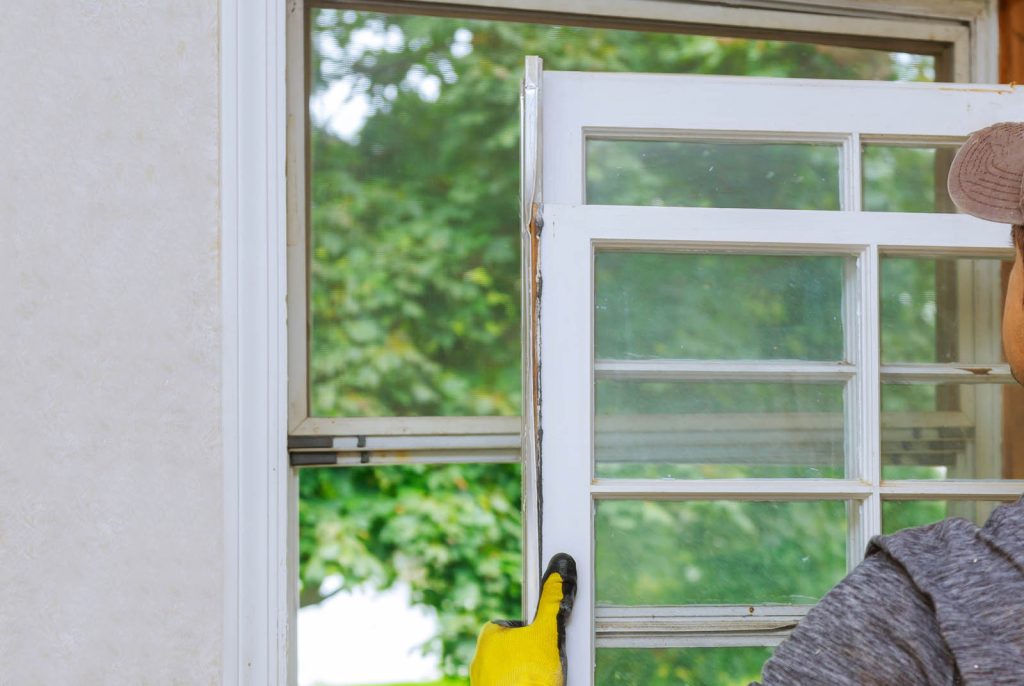
While retrofitting allows you to change the window, if you want to alter the shape of a window drastically, or expand the space a window takes up, you’ll need to replace the window in its entirety.
Window replacement is a more involved process where you strip the opening down to the structural wall studs. This method is usually necessary if your old frames are rotting, damaged, or if you want to change the size or shape of the window. Because it involves removing the exterior siding and interior trim to reach the “rough opening,” it is essentially “major surgery” for your wall, but it results in the best possible insulation and a completely fresh look.
The process begins by carefully prying away the interior casing and the exterior trim or siding around the window to expose the frame’s mounting flanges. Once the fasteners are removed, the entire window unit—frame, glass, and all—is pulled out as one piece, leaving a gaping hole in your house. This gives you a rare opportunity to inspect the structural wood for water damage or mold and repair any issues before the new window goes in.
After the opening is prepped and flashed with waterproof tape, the new window unit is set into the hole. Because you aren’t restricted by an old frame, the installers can use shims to make the new window perfectly level, even if the house has settled. Once the window is nailed into the studs, the gaps are filled with professional-grade insulation, and new trim is installed both inside and out. While this path is more expensive and time-consuming than a retrofit, it offers the highest energy efficiency and ensures that any hidden structural problems are solved for good.
Replacing or Retrofitting Corner Windows

If you want to add a corner window to your home where there currently isn’t one, it can be challenging.
Since windows aren’t load-bearing, a corner window needs complex engineering. A retrofit or replacement will actually require new construction to cantilever a beam, dispersing the load and allowing glass-on-glass or coupled corner windows to be installed.
However, this is expensive and akin to a renovation.
TonyView solves this problem. TonyView is the first load-bearing corner window. This makes a window retrofit or replacement easy, with the ability to add a unbroken view into any corner space without massive construction or feats of engineering.
Types of Retrofit Windows
In addition to TonyView, there are other types of retrofit windows. These are types of retrofit windows, and the applications they are suitable for.
- Flush-Fin (Z-Bar): A window with a large exterior flange that overlaps your existing frame; it is the go-to choice for homes with stucco or masonry exteriors.
- Block-Frame: A “finless” window designed to slide directly into an existing wood frame once the old sashes are removed.
- Sloped-Sill Adapter: A specialized block-frame window with a wedge at the bottom to sit level on a traditional angled wood windowsill.
- Double-Hung: Features two moving panels (sashes) that slide up and down, usually tilting inward for easy cleaning of the exterior glass.
- Single-Hung: Only the bottom panel slides up, while the top remains fixed; it is generally more budget-friendly and airtight than a double-hung.
- Horizontal Slider: A window that slides side-to-side on a track, making it ideal for wide openings where you don’t want a sash swinging out.
- Casement: Hinged on the side and opens outward with a hand crank like a door; it provides the best seal against wind and excellent airflow.
- Awning: Hinged at the top and swings outward from the bottom, allowing you to keep it open for ventilation even during light rain.
- Hopper: Hinged at the bottom and opens inward from the top; these are most commonly found in basements or small bathrooms.
- Picture (Fixed): A non-operable window designed solely for views and light; because it doesn’t open, it is the most energy-efficient option.
- Bay & Bow: Units that project outward from the home; Bays typically have three panels at sharp angles, while Bows use 4–6 panels to create a curve.
- Garden Window: A box-like window that extends outward to act as a mini-greenhouse, usually installed over kitchen sinks.
- Jalousie: Uses parallel glass slats that tilt open and shut like a blind, common in older homes in very warm, tropical climates.
- Tilt-and-Turn: A versatile European style that can either tilt inward from the top for a breeze or swing open like a door for cleaning and exit.
Adding Corner Windows Without Complex Engineering
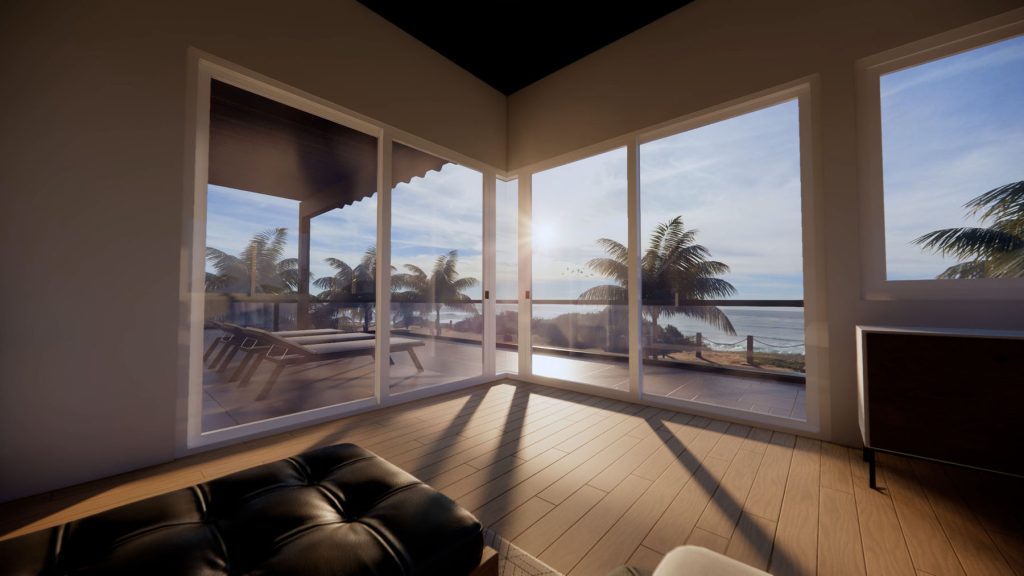
When you want a striking design, without having to undergo a full renovation, there are only a few choices. To retrofit a window in a corner and add a stunning view, consider TonyView. Our windows are unlike any other, load-bearing up to three stories and easy to install.